The expanding science of biological invasions
A new book looks at how the field of invasion science has grown rapidly as alien species play an increasing role in biodiversity loss and ecosystem breakdown
By Alexander Waller, 4 Sept 2026
In
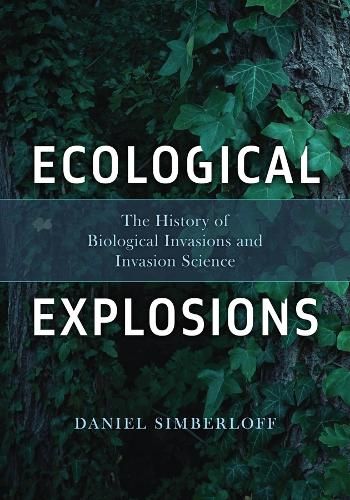
Ecological Explosions: The History of Biological Invasions and Invasion Science
Daniel Simberloff
University of Chicago Press, £48.00
The Intergovernmental Science-Policy Platform on Biodiversity and Ecosystem Services (IPBES) rates invasive species as being one of the top five direct factors driving worldwide biodiversity decline and the global cost linked to the harms of invasive species runs into hundreds of billions of dollars.
Human activities have led to the establishment of at least 3,500 invasive alien species, which detrimentally affect biodiversity, ecosystems, human health, and food and water security, with the economic costs rising fourfold every decade. IPBES estimates that, alongside various other drivers, alien invasive species have contributed to around 60% of recent extinctions.
To address this, the Kunming-Montreal Global Biodiversity Framework (GBF), adopted in 2022, included the ambitious target of reducing the rate of introductions and establishment of invasive alien species by half within eight years. As it is now midway through the GBF timeframe, it is an auspicious time to reflect on the history of biological invasions and the progress made through invasion science.
Ecological Explosions author Daniel Simberloff is ideally placed to write a seminal work on the history of invasion science. An influential expert on biological invasions, with hundreds of publications dating back over half a century to his name, he coined the term ‘invasional meltdown’ to describe the phenomenon whereby two invasive species facilitate the establishment and impact of each other, and was a lead author of the 2023 IPBES assessment report on invasive alien species and their control.
Birth of a new discipline
The first half of Ecological Explosions details the gradual but steadily growing impacts of a variety of invasive animals and plants through colonial expansionism and the globalisation of trade.
Invasion science as a field of study has grown exponentially since the 1980s following interest stimulated by the Scientific Committee on Problems of the Environment (SCOPE). And since the late 20th century there has been a flood of scientific publications, workshops and conferences contributing to the development of invasion science as a discipline. The field encompasses not only ecology, biology and geography, but also embraces studies of invasive species from the perspectives of sociology, politics, economics and health research.
The second part of this encyclopaedic volume describes the applications of modern technology to the study and management of invasive species, such as genetically engineered Trojan Y genes to prevent population growth, and geographical information system databases to monitor and predict shifts in species distribution.

The subsequent 250 pages of this extremely well-researched book are devoted to notes and references. There are also accounts of various theories, including the enemy release, fluctuating resource, propagule pressure and empty niche hypotheses, among others.
The readability of the book is enhanced by the use of common rather than scientific names. Some illustrations and graphs are used to break up the text. As half of the title refers to the history of invasions themselves, some more illustrations would not have been out of place, such as images of the tawny crazy ant or spotted lanternfly, or more maps to demonstrate range expansions.
A number of diverse management approaches have accompanied the rise of invasion science. A chapter acknowledging the application of the science to underpin government policies and legislation could be a welcome addition to this book.
Ecological Explosions may also have greater appeal to a wider audience if there were more references to invasive species that have a direct economic impact on property owners, such as Japanese knotweed in the UK (which is classified as invasive by its inclusion in Schedule 9 of the Wildlife and Countryside Act 1981) or lantana in Australia, which can also significantly reduce property values.
The role of citizen science
Simberloff acknowledges that citizen scientists play a role in early detection and rapid response through participating in surveys, yet he seems to understate the vital role these partnerships play, such as the thousands of people who worked together to eliminate the non-native kelp wakame from Scottish shorelines in response to the Galloway Seaweed Search. Contributions from the general public in the UK who have taken effective action by submitting sightings of hornets on the Asian Hornet Watch smartphone app are helping to prevent these predators from establishing, ultimately protecting pollinator insect populations. The Atlas of Living Australia’s Biosecurity Alerts Service enables smartphone users to report invasive species, resulting in nearly all sightings coming from citizen scientists. This wealth of gathered data feeds the science itself – and we all know the idiom about how not to treat the hand that feeds us.
In summary, Simberloff has written an authoritative, insightful and exhaustive history of the expanding discipline of invasion science that will be of utmost interest to ecologists, geographers, conservationists, social science researchers and historians of science. He has crafted a definitive chronicle of how this new science grew from pioneering observations, through an exponential phase, to become a fully established field.
Dr Alexander Waller CBiol FRSB is visiting professor of Environmental Ethics Education at the American University of Sovereign Nations.
This article was first published in the print issue of The Biologist, the RSB's award-winning membership magazine. Subscribe by becoming a member today.