Orcas and boat attacks: is it revenge, fear, play — or something else?
The latest research on why orcas are approaching and damaging boats around the Strait of Gibraltar
By Mike Follows, 4 Sept 2026
In
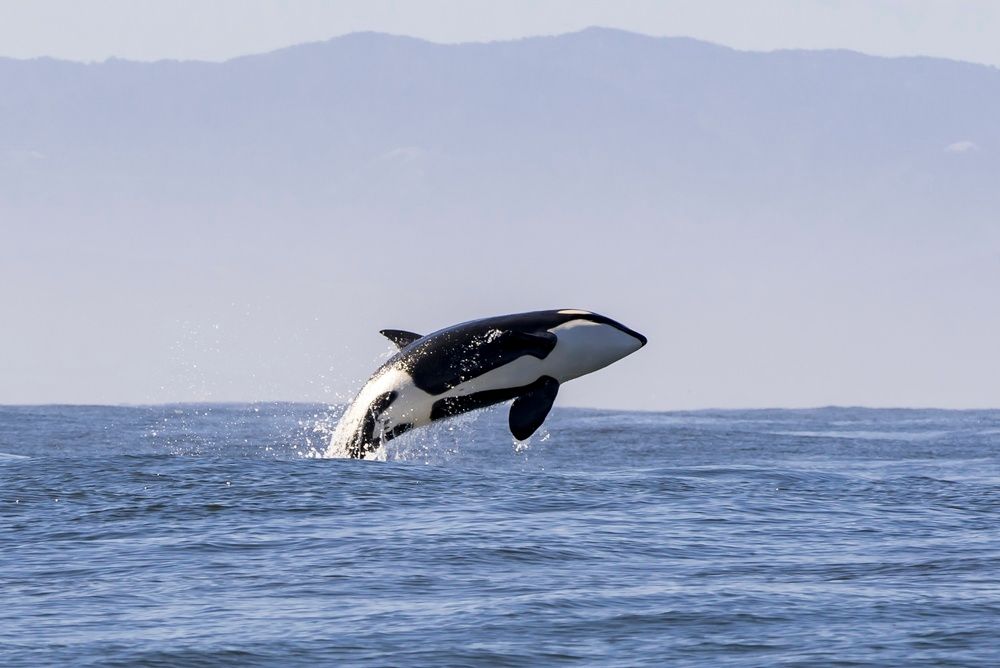
The summer of 2020 saw an unprecedented shift in human behaviour as people around the world attempted to limit the spread of the COVID-19 virus. However, in the narrow stretch of ocean between southern Spain and North Africa, a group of critically endangered marine mammals began to act strangely too.
Reports emerged of orcas (Orcinus orca) – apex predators that interact with boats extremely rarely – nudging and ramming into sailing vessels with a new and alarming frequency. One skipper, David Smith, told the BBC how the catamaran he was delivering to Gibraltar was surrounded by up to a dozen orcas, some of them juveniles, who repeatedly thudded against the hull of his boat – even after the coastguard advised him to cut the motor, drop the sails and be “as uninteresting as possible”. As the sun began to set, the ramming went on and on, and the boat was drifting 20 miles from the coast of Portugal. Smith feared the animals would eventually fracture his vessel’s steering column and sailed towards a nearby fishing boat for help. At this point the animals seemed to lose interest.
There were 40 similar incidents that summer, some less dramatic, some more so – and the interactions have continued ever since. In 2024 three passengers of a British yacht were rescued by Spanish coastguards after the boat was sunk by three orcas that thumped into and bit at their rudder as if “trying to wrench it off”.
By a strange cinematic irony, the vessel targeted by the great white shark in the movie Jaws was called Orca. Yet it is now Iberian orcas, not sharks, that are more likely to menace boats. In the Strait of Gibraltar and along the Atlantic coasts of Spain and Portugal, more than 700 incidents have now been documented since 2020 – ranging from minor contact with rudders to severe steering damage and the sinking of five vessels[1].
Trouble in the strait
There is only one documented case of a wild orca injuring a human – a surfer who may have been mistaken for a seal – but that is scant comfort to crews whose boats are being rammed, sometimes with enough force to spin the vessel around or jolt it violently, by several tonnes of highly intelligent predator – especially as some orca populations also prey on sharks. Scientists, meanwhile, still do not agree on what is driving the behaviour.
Orcas are the largest species of dolphin, with adult males reaching up to eight metres in length and weighing more than six tonnes. They are highly intelligent predators with complex social organisation and sophisticated acoustic communication.
Research over recent decades has shown that orca societies also possess distinct ‘cultural traditions’: different populations have distinct diets, vocal dialects and hunting behaviours that are passed between generations through social learning[2]. In many populations, pods are led by experienced matriarchs, often post-menopausal females whose ecological knowledge can be critical during food shortages.
The Iberian population itself is small and critically endangered, and is thought to number only around 40 to 50 individuals[3]. They are highly specialised predators of Atlantic bluefin tuna (Thunnus thynnus)[4][5] and inhabit one of the busiest maritime corridors in the world, where commercial shipping, ferries, fishing boats, naval traffic and recreational craft overlap directly with the orca community’s feeding habitat[6].
Before the documented incidents with boats, interactions between humans and orcas had been increasing in the region over recent decades. Iberian orcas are frequently observed taking bluefin tuna from long fishing lines during seasonal tuna migrations[3], and whale-watching and recreational boating activity in the Strait of Gibraltar has expanded substantially.

The Iberian 'Gladis' individuals
The diagram left shows some of the Iberian ‘Gladis’ individuals identified in repeated vessel interactions. Fourteen Gladis whales have so far been documented, although only a smaller core group appears to be frequently involved (adapted from Esteban et al. IWC, 2022).
Tracking the trouble
The orcas most frequently associated with vessel interactions have been designated ‘Gladis’ individuals by researchers monitoring the population. (The term derives from Orca gladiator, an obsolete scientific name formerly applied to ‘killer whales’).
According to Esteban et al, 14 Gladis individuals have been identified, including juveniles such as Gladis Negra and Gladis Gris (see ‘The Iberian “Gladis” Individuals’, right)[7]. Within this group a smaller core group appears responsible for a disproportionate number of incidents, while some individuals seem to come close without ever actually joining the fray.
Esteban also found that interactions peak during the summer months, especially between June and September, and occur most frequently around midday. A 2024 international workshop report on Iberian orca interactions documented that, of the more than 700 incidents since 2020, most involved sailing yachts and particularly their rudders and sterns[1]. The average vessel was about 12 metres long and travelling at 5–6 knots.
Modern ‘spade rudders’ featured in around two-thirds of reported cases. These exposed designs protrude unsupported beneath the hull and may be easier for orcas to manipulate because they move visibly when pushed. However, researchers cannot yet determine whether spade rudders are genuinely targeted more often or whether this simply reflects their prevalence among vessels in the region. What is clear is that orcas consistently target the rudder itself, pushing and twisting it regardless of design. The resulting damage can be severe.
The ‘aversive motivation’ theory
One widely circulated explanation for the orca-yacht interactions centres on an orca nicknamed White Gladis, which, according to some reports, began to interact with boats after being injured by a vessel. Online, the theory rapidly evolved into stories of the killer whale’s ‘revenge’.
The popular revenge narrative can be viewed as an anthropomorphic interpretation of what scientists have described as the ‘aversive motivation’ hypothesis, which posits that an initially negative encounter with a vessel may have triggered aggressive, defensive or investigatory behaviour that has then spread through social transmission.
According to reports, one orca began to interact with boats after being injured by a vessel. Theories rapidly evolved into stories of the killer whale’s ‘revenge’
However, the scars visible on White Gladis are not necessarily evidence of vessel trauma. Parallel linear scarring, known as ‘tooth-rake marks’, is common in orcas and is widely interpreted as evidence of social interaction, rough play or aggression. One recent study on Southern Resident killer whales off the coast of British Columbia found that younger male orcas carried the greatest number of fresh rake marks, probably reflecting increased social interaction and rough play during periods of high prey availability[8].
Scientists such as the co-founder and director of the Orca Behavior Institute, Monika Wieland Shield, have cautioned against anthropomorphising the orcas’ intent: although they possess advanced cognition and long social memories, there is currently no evidence that revenge motivates these interactions[1]. Deborah Giles, science and research director at Wild Orca, has also pointed out that Pacific Northwest orcas endured decades of intense human interference when individuals were being captured for marine parks in the 1960s and 1970s. Pods were pursued and individuals separated using boats, aircraft and underwater explosives. Despite this, those populations never developed sustained patterns of physically interacting with vessels.
Another limitation of the aversive motivation hypothesis is that the orcas do not generally behave as if they are avoiding boats. Instead, they often approach vessels voluntarily, remain engaged for prolonged periods and repeatedly manipulate rudders. Researchers argue that even if the behaviour initially emerged in response to stress, it may have since evolved into socially reinforced behaviour involving curiosity, play or sensory stimulation.
Play or prey?
Play is especially widespread among intelligent mammals and is associated with exploration, learning and social bonding. If food resources are relatively abundant, younger animals may also have more time and energy available for exploratory interactions. Bluefin tuna stocks, severely depleted by overfishing, began recovering after stricter quotas were introduced between 2005 and 2011.
Another possibility is that orcas are treating rudders as prey analogues. Iberian orcas hunt large, fast-moving bluefin tuna, sometimes targeting the tail region to slow or exhaust them[4]. A yacht rudder may superficially resemble the movement and resistance of a tuna’s tail, particularly to younger orcas refining their hunting techniques. However, bluefin tuna are among the fastest fish in the ocean, whereas the vessels involved in most interactions are moving comparatively slowly, typically at around 5–6 knots. Adult whales also often remain nearby without directly participating in the rudder interactions, unlike during coordinated tuna hunts.


Gibraltar-based marine naturalist Eric Shaw has proposed that the interactions may represent a defensive or immobilisation response rather than predatory behaviour. Sailing yachts can approach relatively quietly under sail, potentially surprising pods, including mothers with calves. Shaw argues that targeting the rudder – effectively the vessel’s ‘tail’ – may reflect the same strategy orcas use to disable prey or neutralise perceived threats[9].
Renaud de Stephanis, president of CIRCE Conservación de Cetáceos, has suggested that orcas may initially be attracted to the turbulence and pressure generated by propellers. When sailing yachts travel under sail alone, some animals may redirect their attention to the rudder instead, becoming ‘frustrated’ by the absence of propeller turbulence they appear to expect[10].
Social learning is well established in killer whales[2], and, indeed, orcas are known for temporary cultural ‘fads’. In the late 1980s some Pacific Northwest orcas carried dead salmon on their heads before the behaviour disappeared and later re-emerged decades later. Such episodes illustrate how novel behaviours can spread socially through orca populations without serving any immediately obvious survival function.
Sounds of the sea
Another important area of interest for those studying this phenomenon is acoustics. Orcas rely heavily on sound to communicate, maintain pod cohesion and locate prey. Ford’s classic study of resident orca acoustic behaviour demonstrated the importance of vocal communication and echolocation in coordinating social and hunting activity[11], and more recent work has shown that vessel noise can directly interfere with feeding behaviour. Holt et al found that endangered orca populations reduced prey-capture effort in the presence of vessels and associated underwater noise[12].
The Strait of Gibraltar presents an unusually intense acoustic environment, with persistent noise from shipping and vessel traffic.
An analysis by the Marine Biological Association found that the most critical factors that determined whether a boat was likely to be nudged or rammed by an orca were the type of boat (i.e. a yacht), the depth of water, the use of a motor and the use of autopilot systems. Both the motors and the autopilot function produce noise at a similar frequency to the frequencies used by the orcas in their social, hunting and reproductive communication. Marine researcher Leila Moore has suggested that virtually all documented interactions occur in waters that are 20–40m deep[13]. At these depths, underwater vessel noise and frequencies produced by engines or autopilot systems can travel considerable distances – up to 2km.
A yacht rudder may superficially resemble the movement and resistance of a tuna’s tail, particularly to younger orcas
The sudden behavioural shift to damaging yachts first emerged in the early months of the COVID-19 ‘anthropause’, when maritime traffic declined sharply and underwater noise levels fell significantly in several monitored regions worldwide[14][15]. This timing prompted speculation that abrupt changes in ocean soundscapes might have influenced cetacean behaviour in poorly understood ways. But with traffic levels having since returned to pre-pandemic levels, and incidents continuing, there remains no clear causal link.
What is clear is that the Iberian orcas inhabit an ecosystem that is under growing environmental pressure. Persistent pollutants such as polychlorinated biphenyls (PCBs), although banned decades ago, remain widespread in marine ecosystems and have been linked to reproductive, neurological and immune-system dysfunction in several orca populations.
A major European study by Jepson et al found PCB burdens high enough to cause physiological harm in many European populations, with some of the highest concentrations recorded in the Strait of Gibraltar and around the UK[16]. Although there is no direct evidence linking PCB exposure to the rudder interactions, chronic toxic stress may contribute to broader behavioural and physiological disruption.
No single hypothesis fully explains the Iberian orca interactions. The behaviour may involve elements of play, social learning, prey practice, stress, acoustic disturbance or defensive responses – perhaps simultaneously. Or it may be something that we have not even considered.
That uncertainty reflects the difficulty of studying long-lived, socially sophisticated predators in an ocean increasingly shaped by human activity. What is already clear is that the behaviour is patterned, socially mediated and concentrated within a small, endangered population occupying one of the busiest marine corridors on Earth.
Whether the phenomenon fades, spreads to more individuals or populations, or evolves further remains unknown. Understanding the underlying causes will be key in taking actions to stop the situation worsening, and to ensure these magnificent apex predators – as well as Iberian sailors – remain safe and healthy.
Mike Follows is a science teacher and scuba instructor with mixed feelings about an underwater encounter with wild orcas.
This article was first published in the print issue of The Biologist, the RSB's award-winning membership magazine. Subscribe by becoming a member today.
References
1Zerbini, A.N. et al. Interactions between Iberian killer whales and vessels: Management recommendations. Workshop report submitted to the International Whaling Commission Scientific Committee (2024).
2Whitehead, H. & Rendell, L. The Cultural Lives of Whales and Dolphins (University of Chicago Press, 2015).
3Esteban, R. et al. Adv. Mar. Biol. 75, 141–172 (2016).
4Guinet, C. et al. Mar. Ecol. Prog. Ser. 347, 111–119 (2007).
5Esteban, R. et al. Biol. Conserv. 194, 31–38 (2016).
6Esteban, R. et al. J. Mar. Biol. Assoc. U. K. 94(6), 1317–1325 (2014).
7Esteban, R. et al. Update on the interactions between killer whales and vessel along the Iberian Peninsula. International Whaling Commission Scientific Committee Working Paper (2022). SC/68D/SM/03.
8Grimes, C. et al. Mar. Mamm. Sci. 38(3), 941–958 (2022).
9Shaw, E. Dr Eric Shaw’s take on attacks by killer whales documented recently in the Strait of Gibraltar. Helping Hand Trust, Gibraltar (2024).
10De Koster, J. 36 broken rudders: An interview with Renaud de Stephanis. Jetty De Koster (2023).
11Ford, J.K.B. Can. J. Zool. 67(3), 727–745 (1989).
12Holt, M.M. et al. Mar. Environ. Res. 170, 105429 (2021).
13Moore, L. Orca interactions with sailing yachts. Marine Biological Association (2024).
14Ryan, J.P. et al. Front. Mar. Sci. 8, 656566 (2021).
15Dunn, C. et al. Front. Mar. Sci. 8, 673565 (2021).
16Jepson, P.D. et al. PCB pollution continues to impact populations of orcas and other dolphins in European waters. Sci. Rep. 6, 18573 (2016).